
Concrete Climates

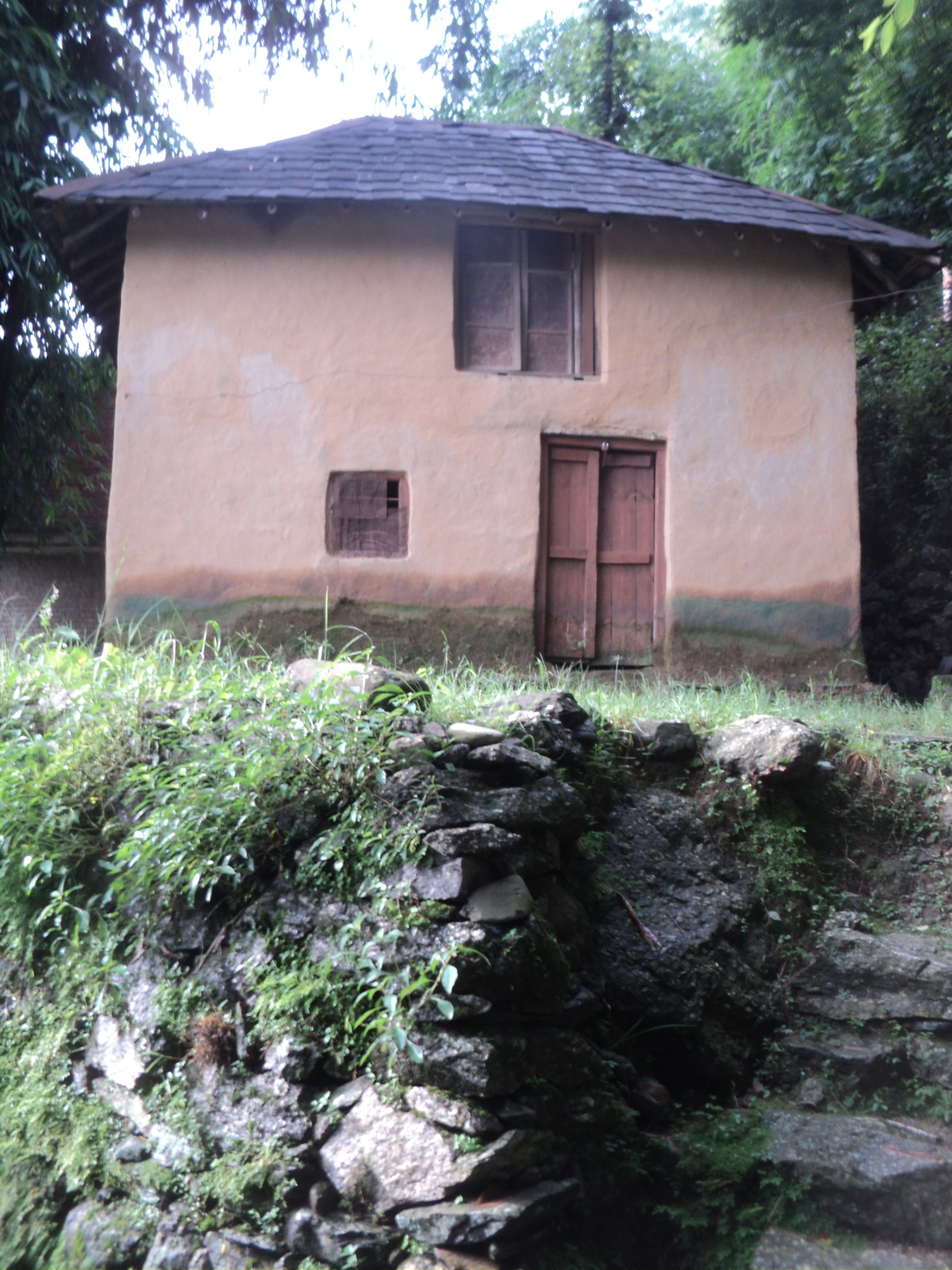
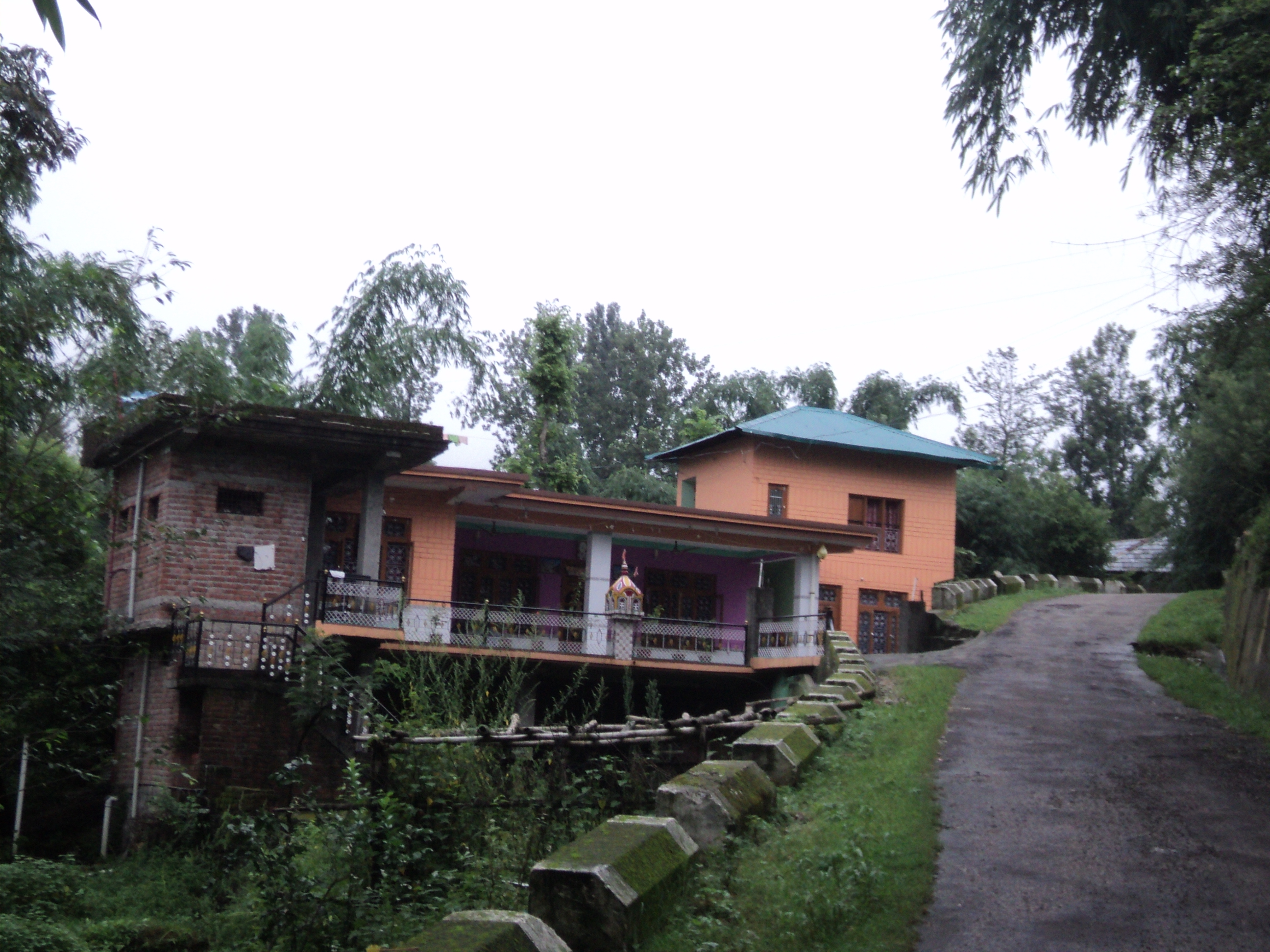
On the morning of April 4, 1905, a devastating earthquake ripped through the sleepy Kangra valley of Himachal Pradesh in northern India, razing 100,000 houses and killing more than 20,000 people. It was one of the India’s deadliest earthquakes ever recorded. Born in 1938, Nulshiram from Kandbari village recalls conversations about it from his childhood. In those days, memories of death and destruction were still fresh. Mere rumors of earthquakes made whole villages camp outdoors through bitterly cold nights, waiting for the imaginary tremors to pass. Residents also seriously considered earthquake risks while building traditional kuccha houses. After all, the Kangra valley is situated in the notoriously seismic western Himalayan region which the Government of India categories as a “Zone 5” earthquake area, its highest classification. However, these concerns haven’t impeded the proliferation of new pucca houses.
In Hindustani, kuccha broadly means raw or uncooked and pucca means cooked. While these words were originally used to describe food habits of South Asian residents, they were later extended to differentiate between impermanent or inferior building materials and permanent or superior materials, respectively, during the later stages of British colonial rule (Cowell 2016). Today, residents in many parts of South Asia use kuccha to denote a whole range of locally sourced, natural building materials, like mud, bamboo, and wood. They use pucca to denote market-procured, industrially manufactured materials, like cement, concrete, and steel.
A poorly designed pucca house can be very rigid such that it fails to withstand the lateral forces induced by an earthquake. It can develop cracks and breakages along corners and joints, which can precipitate a complete structural failure. Concrete’s dense materiality makes it very heavy. When a pucca house collapses, its heavy concrete roof slab will flatten anyone under it. Contrastingly, traditional kuccha houses are deftly latticed together by Kangra’s skilled craftspeople. Their roofs afford a degree of flexibility that can account for an earthquake’s lateral forces. Complete structural failure, if at all, is slow and predictable, giving residents sufficient time to escape their collapsing homes. They are also much lighter than their pucca counterparts. As Nulshiram notes, “There is still a chance to escape with your life if you happen to be trapped under a kuccha roof”.
Nulshiram is not alone in espousing concerns about concrete’s growing use for construction. Today, across India and the Global South, concrete is rapidly becoming the primary materiality of urbanism, so much so that, humans are pouring more than 20,000 Olympic-size swimming pools of concrete every day, making it the most used human-made substance on earth (Courland 2011). These figures have alarmed sustainable development advocates. The production of cement, a key component of concrete, contributes seven percent of global CO2 emissions, almost three times the emissions produced by the aviation industry (Agence France-Presse 2021). Sand mining for concrete construction severely damages riverine ecosystems, negatively impacting the lives and livelihoods of countless communities across the world (Dawson 2021). Poorly constructed concrete buildings have also been implicated in exacerbating the deadly effects of recent climate disasters, like the 2015 Nepal earthquake and the 2021 Himachal Pradesh flashfloods and landslides (Panwar 2021). In other words, concrete has become a “byword for ecological carelessness” (Harford 2017). Nowhere are these concerns more palpable than in the western Himalayan region which is poised to be one of the vanguards in humanity’s battle against global climate change (IPCC 2021). And yet, what puzzled me was that these immediate threats hadn’t translated into the construction of more ecologically sound and safe houses by Kangra’s residents.
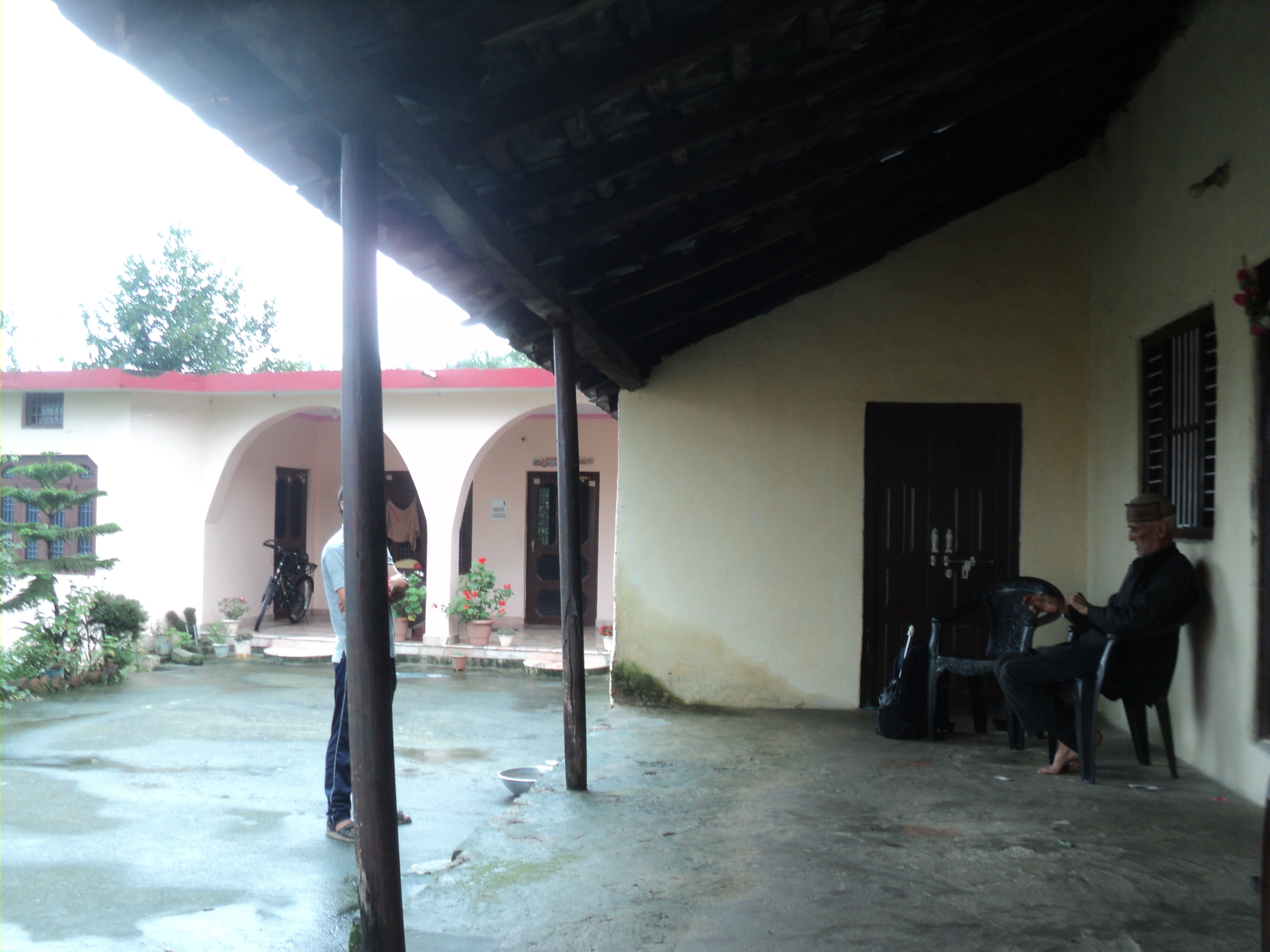
“Yeh shaan ki baat hai” (It’s a matter of prestige), said Nulshiram, in response to this question while pointing to the neighboring pucca house coated in a garish pink. This house was in stark contrast to Nulshiram’s humble kuccha house, made with adobe and a sloping bamboo and slate roof. The pink house had kiln-brick walls and pillars adorned with semi-circular arches supporting a flat concrete roof slab. Load bearing arches are not a part of the region’s vernacular architectural palette because they are a seismic risk. The house belonged to Nulshiram’s son, Anuj. For Anuj and his family, the construction of a “modern” pucca house had elevated their social status in the village. They considered Nulshiram to be of a pichhada (backward) mindset for still insisting on residing in a kuccha house. The younger generation did not want to live in kuccha houses because they carried a negative stigma. They were associated with the drudgery and uncertainty of Kangra’s traditional subsistence jobs, like in agriculture and forestry, which were also called kuccha jobs. These were impermanent and irregular. On the other hand, pucca houses denoted values of pragati (progress) and tarakkee (improvement) that showcased the millennial generation’s desire for secure pucca jobs, that were permanent and regular, in higher valued secondary and tertiary economic activities, like manufacturing, tourism, and other white-collar service industries. In a melancholic mood, Nulshiram lamented that much like his withering body, the environmental benefits of kuccha houses would soon be forgotten in the valley.
The above vignette highlights the dilemmas facing residents of ecologically vulnerable regions, like Kangra, that are disproportionately exposed to the vagaries of global climate change. Over the last three decades of deregulated economic growth, India has witnessed an increased flow of capital surpluses from metropolitan regions (from both within and outside the country) to rural and peri-urban regions in search of quick profits. In Kangra, this flow has manifested in a mahaaul or climate of heightened construction activity, reflected in ongoing building projects of dams, bridges, highways, hotels, and houses, that are mediated primarily by concrete. Such processes of intense capital-infused and concrete-mediated construction activity are what I call concrete climates.
The above vignette highlights the dilemmas facing residents of ecologically vulnerable regions, like Kangra, that are disproportionately exposed to the vagaries of global climate change. Over the last three decades of deregulated economic growth, India has witnessed an increased flow of capital surpluses from metropolitan regions (from both within and outside the country) to rural and peri-urban regions in search of quick profits. In Kangra, this flow has manifested in a mahaaul or climate of heightened construction activity, reflected in ongoing building projects of dams, bridges, highways, hotels, and houses, that are mediated primarily by concrete. Such processes of intense capital-infused and concrete-mediated construction activity are what I call concrete climates.
References
Agence France-Presse. (2021, Oct 19). “Concrete is the Third Largest Emitter of Greenhouse Gases on Earth After China, US.” Firstpost. https://www.firstpost.com/tech/science/concrete-is-the-third-largest-emitter-of-greenhouse-gases-on-earth-after-china-us-10068441.html
Courland, R. (2011). Concrete Planet: The Strange and Fascinating Story of the World’s Most Common Man-Made Material. Prometheus.
Cowell, C. (2016). “The Kacchā-Pakkā Divide: Material, Space and Architecture in the Military Cantonments of British India (1765-1889).” ABE Journal. Architecture beyond Europe, 9–10.
Dawson, K. (2021, Jul 12). Intervention – “Sedimentary Justice: A Planetary Politics of Shifting Sediment.” Antipode Online. https://antipodeonline.org/2021/07/12/sedimentary-justice/
Harford, T. (2017). “The hidden strengths of unloved concrete.” BBC News. https://www.bbc.com/news/business-38317186
IPCC. (2021). Climate Change 2021: The Physical Science Basis. Contribution of Working Group I to the Sixth Assessment Report of the Intergovernmental Panel on Climate Change [Masson-Delmotte, V., P. Zhai, A. Pirani, S. L. Connors, C. Péan, S. Berger, N. Caud, Y. Chen, L. Goldfarb, M. I. Gomis, M. Huang, K. Leitzell, E. Lonnoy, J. B. R. Matthews, T. K. Maycock, T. Waterfield, O. Yelekçi, R. Yu and B. Zhou (eds.)]. Cambridge University Press. In Press.
Panwar, T. S. (2021, Jul 13). “Why are smart cities and towns becoming more prone to floods?” Deccan Herald. https://www.deccanherald.com/opinion/why-are-smart-cities-and-towns-becoming-more-prone-to-floods-1008058.html