
Weathering Extremes
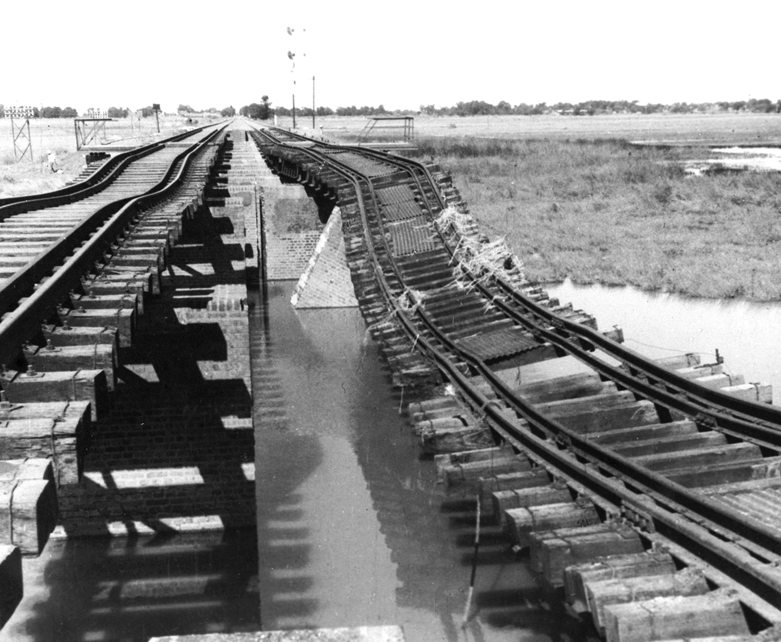

Record-breaking heat, atmospheric pollution, water scarcity, and flooding make South Asian cities a widely recognized nexus of the global climate catastrophe. Crises are unpredictable — but extreme weather is a new normal in South Asia. While the changing of climates and the tempering of extremes has long been the enterprise of colonial and postcolonial states in South Asian urbanism, how can also we bracket notions of uncertainty, risk, loss, damage, and urgency, re-contextualizing them through the different ways in which South Asian communities and cities continue to weather changing mahauls?
Recognizing the convergence of many crises in our present moment, SAUC’s 2025 theme was focused on the creation, management, and experiences of extreme weather. In May 2025, we put out an open call for case studies, inviting contributions from scholars, researchers, and designers across South Asia to think broadly and critically about how conditions become extreme, when they are recognized as crises, and how they operate alongside or in tension with everyday experiences of discomfort, uncertainty, and risk. We asked contributors to consider the temporalities of everyday crises in dialogue with more spectacular forms.
We are delighted to present the final themed collection for Weathering Extremes, which comprises a series of ten case studies that feature innovative research from across South Asia. In October 2026, we hosted a workshop to help authors refine and finalize their case studies with feedback from three invited discussants, Waqas Butt, Nausheen Anwar, and Kasia Paprocki.
A group of case studies address the question of urban climates across broader scales — from the regional agrarian to global geographies. In “From Tibbe to Tudi: How land transformation creates an agricultural extreme in Bathinda,” Tarusha Mishra, Laaraib Ghazi, Anu Sabhlok and Rohit Negi draw from their community-centered fieldwork in Bathinda, foregrounding local language and everyday sensorialities to showcase how climate and atmospheres are felt, spoken, and survived. In his study, “Seasonality, Colonialism and Urban Pollution: The Nexus between agrarian labour, Peri-urban livelihoods and seasonal pollution in Bangladesh,” Jake Smaje also thinks against the urban-rural dichotomy, examining how seasonal labor of brickmaking configures relationships between agrarian political ecology, seasonality, and urban pollution. Anu Jogesh, in “Is Debt Adaptive?” explores how metropolitan governance of finance capital (as constructed in institutions in Mumbai, Delhi, and London) shapes the uneven material context of climate in rural India — disconnected from how rural communities negotiate financial and ecological precarity.
Focusing on urban heat, the next group of authors attend to the embodied ways in which climate vulnerability (produced at the intersection of environmental violences) is experienced and negotiated — whether through built environment responses, labour-organizing, or everyday engagements in the urban realm. In “SHAPeS: Structural Heat Adaptation in Peri-Urban Settlements of Pakistan” Jai Das, Shahmeer Qamar, Syeda Kanza Naqvi, and Zulfiqar Bhutta share their work in developing localized approaches to mitigating heat through the material construction of homes in the low-income communities in Karachi. In her study, “Invisible Labour, Rising Heat: Climate Vulnerabilities of Domestic Workers in Delhi,” Shalaka captures the narratives of domestic workers in Delhi and how their experiences point to the crucial need to examine and address the nexus of climate, caste, gender, and labor. Anushree Gupta in “From Heatwaves to Hashtags: Gig workers and climate change in Urban India” further explores the intersections of labour and climate precarity, through the case of platform workers and their campaigns to politicise and advocate for climate justice in the city as a workplace. In his study, “Liminal Ecologies of Coexistence: Lahore Canal as Vernacular Climate Infrastructure,” Umar Naeem examines the Lahore canal and its contested banks as a critical site of everyday adaptation.
The final three case studies explore knowledge and narratives of climate and weather, across different linguistic registers, epistemological templates, and embodied experiences. In “Weathering Urban Life: Reimagining Water and Waste in Kochi,” Matt Barlow explores waste and wetness as anchors to open questions about the broader histories and urban experiences of flooding in Kochi, including risks of infrastructural containment. In “Endurance as a political act,” Tayeba Batool explores garden and nursery workers’ articulations of bardasht (endurance) and aadat (habit) in Rawalpindi and Islamabad to examine a broader politics of negotiating heat in relation to the spatial and aesthetic production of the city. Andrew Hughes, Efadul Haq, and Tanzil Shafique explore how climate is co-constituted through everyday relationships between bodies, water, infrastructure and memory in their case study “When ‘Extreme’ Weather Becomes Just Weather: Challenging Climate Crisis Narratives in Dhaka’s Korail.”