
Urban Climates
About
In South Asian cities, as with their counterparts in the global North and South, processes of neoliberal urbanization and climate change are bound up in social, environmental, and political contestations, just as they are layered with the sediments of colonial and postcolonial histories. Accordingly, concerns with environmental effects, resources, risks, or conservation are inseparable from the constitution of social identities, forms of citizenship, racial and ethnic divides, processes of militarization or securitization, uneven development, and so on. Future oriented developments for sustainable planning thus necessitate closer attention to messier pasts and presents. In this seminar series, we used climate — in its environmental, political, aesthetic, material, and historical registers — to build a transdisciplinary conversation about the relationships between power, development, and the environment in South Asia.
The Urban Studies Foundation funded seminar series, Urban Climates: Power, Development, and Environment in South Asia, included three meetings in 2019, at the American Association of Geographers annual meeting in Washington DC in April, Cambridge University in June, and Dartmouth College in October. Here we brought together an interdisciplinary group of urban scholars, artists, and designers to share and dialogue across their recent work — such as on waste politics in Lahore, the materiality of groundwater in Chennai, the ship-breaking industry in Balochistan, the Arabian Sea seen from the Mumbai coast, gendered infrastructures in Delhi and much more.
In thinking about the climate in South Asian cities, and region more broadly, we draw inspiration from Christina Sharpe’s articulation of the weather, as the “totality of our environments; the weather is the total climate; and that climate is anti-black” (Sharpe, 2016). In this sense, we foreground ways that atmospheres, bodies, and landscapes are historically weighted and politically differentiated, with violent and harmful structures, circulations, and afterlives (Baviskar, 2002; Gidwani and Reddy, 2011; Butt, 2017), but also how engagement with their materialities, ecologies, and histories might offer latent possibilities for progressive alliances or alternative politics (Ahmed, 2013). In this seminar series, we structured discussions on climate around three key themes: entanglements, liminality, and eviscerations. Through engagements within and across these themes, the series built an interdisciplinary conversation between critical scholars who conduct research on South Asian urban environmental politics and facilitated conversations on cutting edge scholarship on its climates.

Entanglements
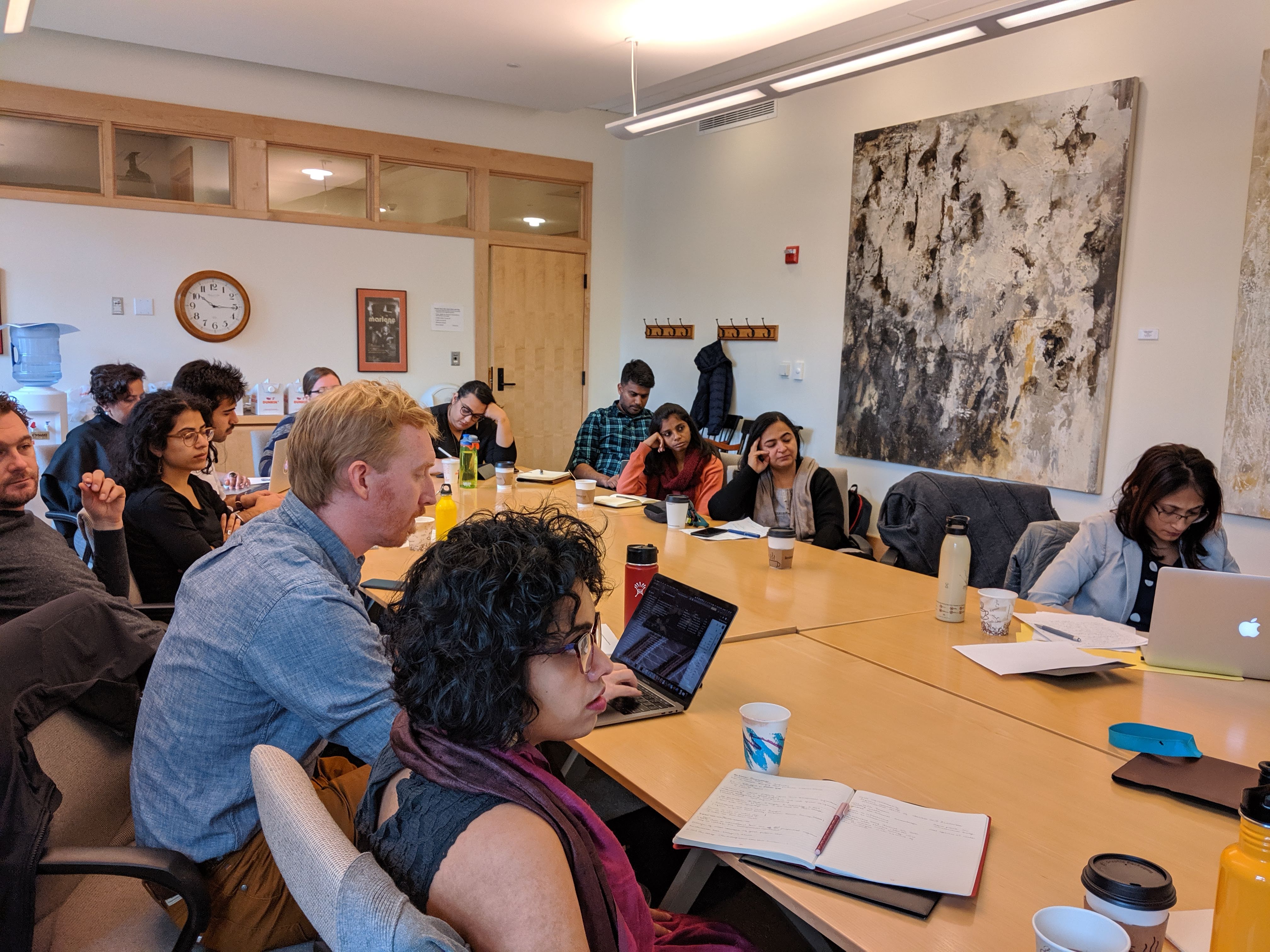
In the first instance, we considered the multi-scalar and historically constituted entanglement of bodies and landscapes. As perspectives from (urban) political ecology, anthropology, and STS have established, the long-held conceptual distinctions that divide culture and nature or subjects and objects become increasingly tenuous when we consider the inter- and intra-relationships of socio-ecological processes (Swyngedouw, 1996; Whatmore, 2002; Latour, 2004; Barad, 2007; Haraway, 2016). Hybrids proliferate as the dichotomy of material and discursive domains is denaturalized. Thus, we are drawn to how “changes in bodies reverberate through landscapes and vice versa” in contexts of infectious disease, rising seas, toxicities of soil, air, and water, or infrastructural fracturing (Nading, 2014, p. 10). Attention to entanglements have helped reveal flows of power, and the interconnections of scales and spaces that constitute urban climates.
Liminality
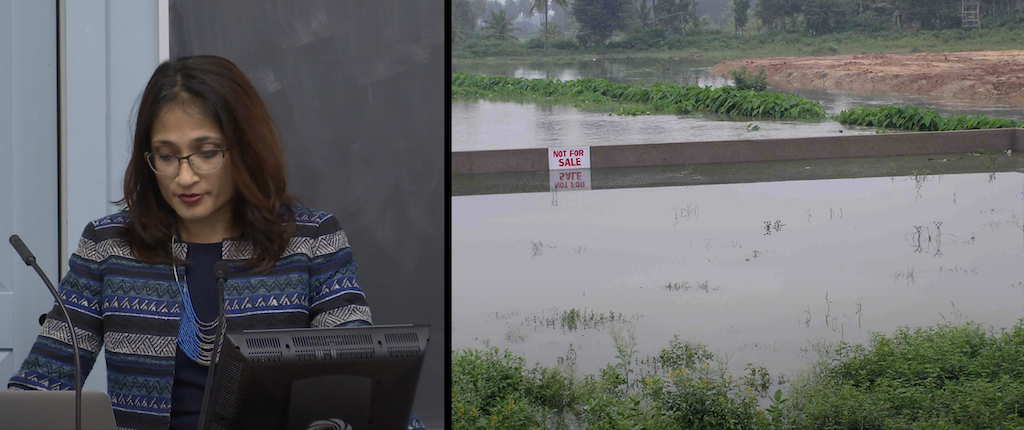
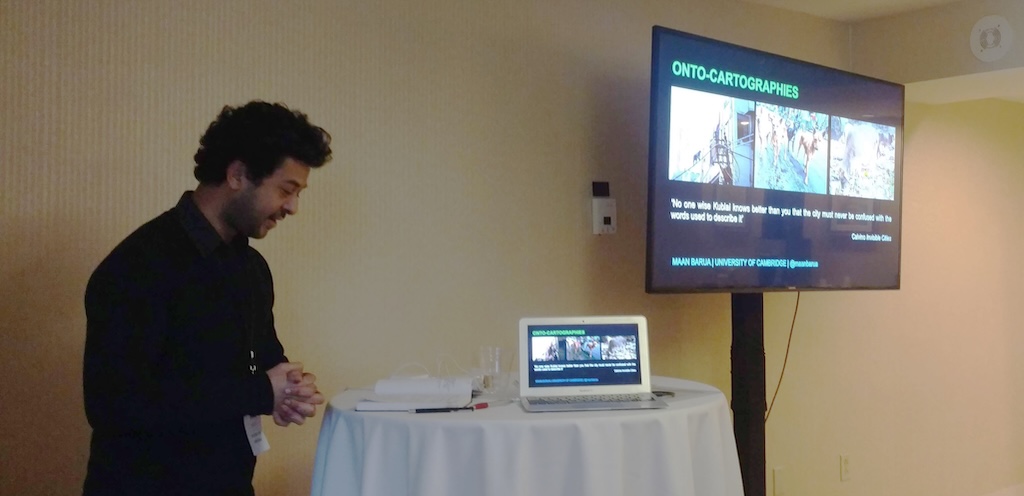
While entanglements help consider the interrelations between the different actors and scales of urbanization, in our second theme we prioritized liminal space as an investigative take-off point. A liminal positioning, we believe, can help interrogate the production of such dichotomies as ‘the urban’ and its constitutive outsides (Jazeel, 2018; Roy, 2015), as well as designations of legality and illegality as they manifest in questions of citizenship, informality, and the right to inhabit and claim space in the city (Anjaria, 2016; Bhan et al., 2016; Ranganathan, 2018). Rather than taking oppositional positions as a given, we emphasized instead the processes of their production, how these were operationalized, and their impacts on resultant urbanisms and subjectivities. We argue that such a focus helps glean what otherwise might “fall away” from urban capitalist processes (Tadiar, 2009). The seminar series showed how such a positioning could highlight the differential, uneven, and often violent climates produced through urban transformation.
Eviscerations
Finally, we drew on Gidwani and Reddy’s (2011) conception of “eviscerating urbanism”, which they use to examine the interlinked production of waste and value. Eviscerating urbanism describes the collective deleterious impacts of “urban parasitism” through ecological colonization and enclosure; processes of “speculative urbanization” through which capital brings underutilized spaces into the realm of value; and the differentiated landscapes of “techno-ecological urbanization.” We extended this conversation to consider the histories and forms of erased or hyper-visible differences that are produced within South Asian cities while being relegated as its excess. We thus seek to attend to histories and processes of socio-environmental injustice, splintered geographies of access to networks and resources, but also the ways in which materialities of waste processes might unsettle development trajectories.
Reflections from the Cambridge workshop
Paper sessions: At the end of the first workshop, participants reflected on how despite a range of approaches to “the urban” and “climate”, the categories made sense and worked to cohere different perspectives; on the power of vivid empirical accounts; on how despite the regional focus on South Asia, the discussions did not directly address some of the theoretical concerns about rethinking or practicing urban studies through the global South; on how more-than-human became an important paradigm of exploration; on the fruitfulness of seeing work in progress, and having adequate time for in depth discussion on these themes.
Roundtable on ‘Practices’: We closed the workshop with a roundtable session and discussion loosely based on the theme on Practices. In this informal conversation the workshop participants discussed how local contexts — or climates — shape research practices. We were particularly interested in hearing from the participants about their experiences conducting fieldwork or other forms of research. The discussion touched on a number of issues including of identity and positionality; different forms of social and physical discomfort and awkwardness that comes in the way of conducting fieldwork within different social, ideological, and political contexts; how relative proximity to our field sites (flying in and out versus long term immersion) shapes and delimits our research; challenges faced in relation to power structures and ideological positioning; problems of invisibility and access in relation to class; how to historicize fieldwork experiences as a way to deal with drastic changes within local and regional contexts through the course of conducting research and writing up; and the differences in disciplinary approaches as well as working with “northern” and “southern” institutions — and how these may be bridged in the spirit of “telling stories together.”
Across the three sessions and keynote lecture at Cambridge, there was an emphasis on thinking from the South (which brings to light important questions about hybridity and the production of value), the politics of scale (state, city within city, body as scale), of visibility (in relation with invisibility, aesthetics, spectacle), materiality (body, concrete, groundwater), different temporal registers (fast-paced development, durability, colonial accretions, futuristic visions), and anxiety around development (shaped around land and identity, and especially related to a lack of belonging).
Reflections from the Dartmouth workshop
This workshop ended with a roundtable discussing salient themes and the afterlives of this series. Some key themes that were raised during this conversation were on more than human engagements; the tensions between embodied and structural approaches to articulating the relations between bodies and labour; the aesthetics, visceral-ness and spectacle of dispossession; the multifaceted mahaul (atmosphere) and its ruptures; the commonalities and divergences within South Asian contexts; problematizing the urban as an analytical frame; and the precarity of liminal spaces. This discussion resonated with our final roundtable at Cambridge in reflecting on how “the urban” and “climate” as categories help cohere different perspectives; on how more-than-human became an important paradigm of exploration; and having adequate time for in depth discussion on these themes.
Overall takeaways
The need for conversation across South Asian urban contexts was driven by a concern about how these cities, like their counterparts in the global North and South, are impacted by neoliberal urbanization and climate change, and are bound up in wider social, environmental, and political contestations, made urgent by the current political climates of fascism, nationalism, and uneven development that we are embroiled in.
The sediments of colonial and postcolonial histories manifest in environmental effects, resources, risks, and conservation; and are inseparable from the constitution of social identities, forms of citizenship, racial and ethnic divides, processes of militarization or securitization, uneven development, and so on. These effects are gravely felt in the challenges raised through Hindutva violence in Kashmir, the curtailment of citizenship and building of detention camps in Assam, the renewed imposition of the beef ban and subsequent lynching incidents, as unfortunately just a few examples amongst many of state politics that have implications for deepening inequalities and heightening environmental change. As such, we consider this workshop and ongoing dialogue an important venue for radical and nuanced entry points for analysis and dialogue.
Funding
Urban Studies Foundation, Seminar Series Award
Smuts Memorial Fund, University of Cambridge (supporting institution)
Dartmouth College (supporting institution and funder). For the Dartmouth workshop, we received additional funding from the following units at Dartmouth College: Dean of Social Sciences, Rockefeller Center, Dickey Center for International Understanding, Asian Societies Cultures Languages, and Department of Geography
People
Organizers: Nida Rehman and Aparna Parikh
AAG participants: Farhana Ahmad (Cornell University), Nausheen Anwar (Karachi Urban Lab), Maan Barua (University of Cambridge), Siddharth Menon (University of Wisconsin Madison), Nipesh Palat Narayanan (University of Colombo), Anthony Powis (University of Westminster), Krithika Srinivasan (University of Edinburgh), Shruti Syal (University of Illinois Urbana Champaign), Yaffa Truelove (University of Colorado, Boulder).
Cambridge Workshop participants: Nikhil Anand (University of Pennsylvania / Keynote speaker), Maan Barua (University of Cambridge), Harshavardhan Bhat (University of Westminster), Waqas Butt (University of Toronto, Scarborough), Charlotte Lemanski (University of Cambridge / Discussant), Siddharth Menon (University of Wisconsin Madison), Anthony Powis (University of Westminster), Anu Sabhlok (Indian Institute of Science Education and Research), Krithika Srinivasan (University of Edinburgh), Sujit Sivasundaram (University of Cambridge / Discussant), Shweta Wagh (Kamla Raheja Vidyanidhi Institute for Architecture).
Dartmouth Workshop participants: Lalit Batra (Dartmouth College / Discussant), Asher Ghertner (Rutgers University), Zachary Lamb (Massachusetts Institute of Technology), Siddharth Menon (University of Wisconsin Madison), Hira Nabi (Independent Filmmaker), Abigail Neely (Dartmouth College / Discussant), Malini Ranganathan (American University / Keynote speaker), Nikhil Rao (Wellesley College / Discussant), Rajyashree Reddy (University of Toronto, Scarborough), Susmita Rishi (Kansas State University), Anu Sabhlok (Indian Institute of Science Education and Research), Yaffa Truelove (University of Colorado, Boulder)