
Invisible Labour, Rising Heat

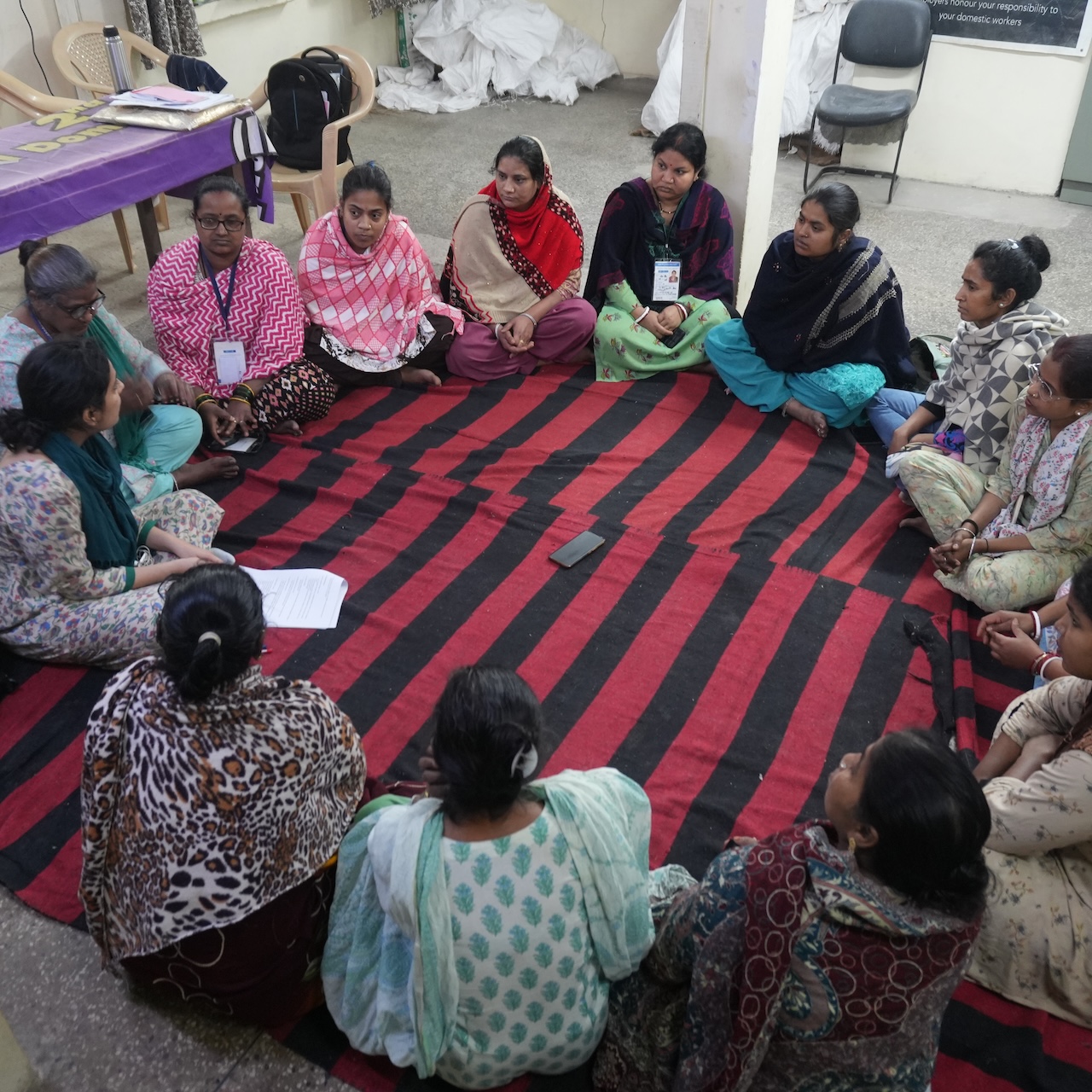
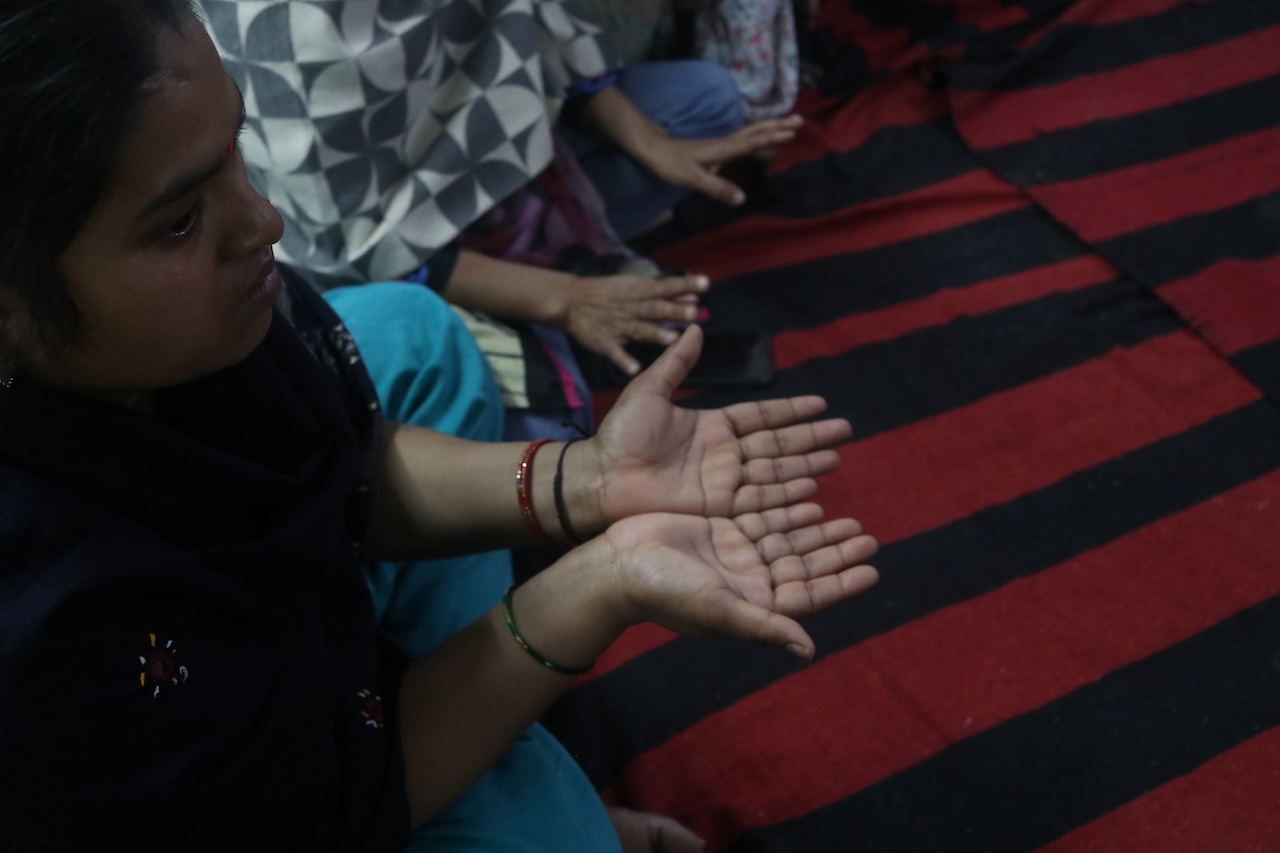
Domestic workers are a vital part of India’s urban economy, but they remain among its most overlooked and unprotected workers (ILO, 2015). Their contribution to the everyday functioning of middle, upper-middle class and elite households is structurally undervalued. Predominantly women, often from migrant backgrounds and often from Dalit, Muslim and tribal groups, domestic workers perform a range of paid domestic tasks like cooking, cleaning, caregiving, and washing. But their labour remains highly unregulated, underpaid, and largely excluded from formal systems of protection. In the context of escalating climate events in Delhi, from intensifying heatwaves to erratic monsoons, domestic workers find themselves at the edge of environmental vulnerability and policy neglect. Drawing on the author’s 2025 Greenpeace India's report "Labouring Through the Climate Crisis: A Qualitative Study of Climate Experiences among Informal Workers in Delhi", this case study examines how domestic workers in Delhi are affected by climate precarity and the ways that current urban governance continues to overlook their occupational risks. The report draws on in-depth interviews and focus group discussions (FGDs) with informal sector workers including domestic workers of Govindpuri area in Delhi to capture their lived experiences of extreme weather events. It highlights how domestic work is structurally invisible in labour laws and environmental planning, and calls for climate adaptation to centre the experiences of informal workers in private and precarious spaces. This case study contributes to emerging scholarship that situates climate justice firmly within the broader framework of labour justice in India. Research shows that environmental harms are mediated by caste-based labour hierarchies, gender inequalities, and informal economic structures, which shape both resilience and dispossession in uneven ways (Sircar 2022; Tandale 2019; Sultana 2022; Ravera et al., 2016). Looking closely at the nexus of caste, gender, labour, climate stress, and the home as an invisible workplace reveals not only why these vulnerabilities persist but also what this intersectional lens can offer in understanding how workers are forced to “weather extremes.”
Delhi's domestic workers, estimated at over five lakh, are overwhelmingly employed on a part-time basis across multiple households (WIEGO, 2020). The vast majority do not possess formal contracts or written terms of employment. The nature of their employment renders them highly dependent on informal and precarious arrangements. Moreover, the lack of legal recognition of the home as a workplace results in an absence of occupational safety norms. There are no provisions for income, working hours, leaves, health, hydration, or protective equipment, even during Delhi's increasingly frequent and extreme weather events.
The domestic workers working in this area navigate compounding environmental and structural stressors. Govindpuri's built environment is marked by congested lanes, minimal ventilation, constant traffic, and the heat-retaining surfaces of concrete infrastructure. Many of these women reside in nearby settlements like Taimoor Nagar and typically commute on foot or in overcrowded buses which exposes them to heat even before the workday begins. Once inside their employers' homes, they are frequently denied access to not only basic thermal comfort but basic services like water, toilets and food. Air-conditioned living rooms are off-limits; many are expected to work in the kitchens and bathrooms without fans or ventilation. This everyday exclusion from cooling and water access highlights how caste-based power relations are materially enacted in domestic spaces and shape unequal vulnerability to extreme heat.Rekha has worked in Govindpuri for over 15 years. During Delhi's record-breaking heatwave in 2024, she fainted on the stairs of a third-floor flat after completing a shift in a house where she was never allowed to drink water. Despite collapsing at work, no medical help was offered; her employer simply told her not to return. She lost two of her jobs that month because she missed days while recovering. Rekha now carries a bottle of water with her and leaves home at 6:30 AM to finish chores before peak heat, but admits that the physical strain has worsened over the years: “Even our bodies are tired of this heat, but our labour does not allow us to stop.”
Similarly, Shazia spoke about how she regularly experiences dehydration, rashes, dizziness, and even fainting due to prolonged exposure to heat in unventilated kitchens during heatwaves, without access to drinking water or rest. Avoiding water to reduce the need to use toilets has increased the risk of urinary tract infections. There are no public toilets, shaded rest areas, or public hydration points along their commuting routes or near work sites. These conditions expose the complete absence of climate-sensitive infrastructure for informal women workers, both at work and in transit. For domestic workers, whose labour requires continuous physical exertion like sweeping, mopping, washing clothes, climbing stairs, carrying weights, these conditions are not only exhausting but also dangerous.
Rachna works in five households every day and cooks for hours near gas stoves in kitchens. Employers don’t allow fans because they are worried that dust might fall on the food, so she works through sweat, coughing, and breathlessness, with no rest or relief. She describes how sweat dripping from her face while cooking was treated as a hygiene issue by her employer, contradictorily produced by the prohibition of fans, demonstrating the disregard for workers' bodily needs during extreme weather. Similarly, Fatima washes dishes and clothes in several homes each day. In winter, her hands go numb as there’s no geyser, and employers don’t offer warm water. These everyday hardships reveal how domestic workers are expected to endure extreme conditions without basic comfort, care, or dignity.
Many of the women interviewed in Govindpuri belong to Dalit, Tribal, and Muslim communities, historically assigned to what is widely considered polluting or menial labour. The casteist legacy of domestic work persists in the unspoken and deeply entrenched social hierarchies within urban households. The workers are not allowed to sit on the furniture in her employer’s home. When offered tea, it is always in a separate steel glass kept aside for “servants.” The denial of access to something as basic as water, with employers refusing workers the right to drink in their kitchens or assigning them separate utensils, is particularly telling of how caste hierarchies intersect with climate precarity. In heatwave conditions, this denial of hydration is not only discriminatory but also life-threatening. Moreover, they clean the toilets but can never use them. During heatwaves, while their employer rests in air-conditioned rooms, they work without a fan or even a break. Such caste-inflected treatment reinforces feelings of inferiority, exclusion, and disposability. It also shapes the terms of climate vulnerability: workers seen as inherently less worthy are less likely to receive empathy, rest, or accommodation during extreme weather events.
At home, relief is equally alien. The one-room dwellings common in informal housing in and around Govindpuri (?) offer little ventilation, and tin or asbestos roofs convert homes into heat chambers. Aarti speaks of the impossible trade-offs she faces between work and childcare. Her children, who attend a nearby municipal school, return home by 1 PM, which is the hottest time of the day. With no fan or cooler at home, she tries to finish her last job early and return to sprinkle water on the floor to keep the room cool. She says, “We can't afford cold water, so I dip their towels and keep them wet. At least they feel some relief.” Aarti herself suffers from frequent headaches and fatigue but continues to work because, as she puts it, “heat won't feed my children, but hunger can kill them faster.” Sleep is fragmented, with Aarti waking frequently to check on children or fan them manually.
This chronic exposure to high temperatures both at work and at home leads to long-term health consequences like exhaustion, body aches, irregular menstruation that go unreported and untreated. With rising rents, and the forced evictions of settlements, workers now live farther from employers’ homes, often commuting in hazardous conditions amidst dense fog in winter, waterlogging during monsoons, or extreme summer heat in overcrowded buses or on foot.
The policy response to these intersecting vulnerabilities remains deeply inadequate. The national e-Shram portal for informal worker registration exists in principle but has limited on-ground impact (Chauhan, 2024). The city lacks a dedicated welfare board for domestic workers, and the Minimum Wages Act has not been consistently applied to this sector. Notably, the National Policy for Domestic Workers, first proposed over a decade ago, still remains in draft form. The National Disaster Management Authority (NDMA) advisory on protecting informal workers, including domestic workers, from heatwaves remains poorly implemented and ineffective in outreach. Climate adaptation strategies like Delhi's Heat Action Plan and pollution control measures are designed for formal workplaces or public infrastructure, not for invisible forms of labour situated within private homes (DDMA, 2024). Furthermore, schemes that could offer partial climate relief, such as health insurance or affordable healthcare facilities or pension plans, are inaccessible due to bureaucratic hurdles, digital illiteracy, or exclusionary eligibility criteria. In essence, domestic workers remain excluded from both labour protection regimes and climate resilience planning.
Domestic workers recognize the changing climate through their everyday experiences like hotter summers, unpredictable rains, and longer illnesses. Their understanding is rooted in lived reality rather than scientific or policy jargon. Many speak about how it has become harder to work and travel, do household chores, or even sleep. They may not always use the term climate change, but they are aware that the weather is not what it used to be. Their understanding comes from bodily struggle, not from formal education or media debates. Despite these structural constraints, domestic workers continue to develop informal strategies for coping with climate stress. These include rearranging work schedules to start before sunrise, using homemade electrolyte solutions to stay hydrated, and forming peer networks to share information or asking for help. Others resort to resting in shaded public spaces between shifts, carrying extra sets of clothes to manage excessive sweating, limiting food and water intake during work hours to avoid nausea or repeated restroom breaks in high heat. Some women negotiate flexible hours with sympathetic employers, and take on work closer to home to reduce commuting during extreme heat. However, such measures are stop-gap solutions, not systemic and long-lasting protections. The burden of adaptation is thus individualised, shifting responsibility away from employers and the state.
The case of domestic workers in Delhi illustrates the urgent need to rethink climate resilience through the lens of informal labour. As climate events become more frequent and intense, the costs of environmental degradation will continue to be borne disproportionately by those with the least protection. Addressing their climate vulnerabilities requires more than isolated welfare schemes. It demands a reconfiguration of how labour, space, and environmental risk are conceptualised in urban policy.
(All names have been changed to protect the identities of the domestic workers interviewed)
References
Chauhan, S. (2024, September 4). “Three years on, e-Shram portal falters due to digital and technical hurdles.” Scroll.in.
Delhi Disaster Management Authority. (2024). Heat Action Plan 2024-25 (Guidelines U/S 18(2)(h) of Disaster Management Act, 2005 for Prevention, Mitigation, Capacity Building and Preparedness to Combat the Adverse Impact of Heat Waves in Delhi).
Greenpeace India. (2025). Labouring through the climate crisis.
International Labour Organization. (2015). Indispensable yet unprotected: Working conditions of Indian domestic workers at home and abroad. Geneva: ILO.
Ravera, F., Martín-López, B., Pascual, U., et al. (2016). “The diversity of gendered adaptation strategies to climate change of Indian farmers: A feminist intersectional approach.” Ambio, 45(Suppl 3), 335–351.
Sircar, S. (2021). Reimagining climate justice as caste justice. In P. Kashwan (Ed.), Climate justice in India (pp. 162–182). Cambridge University Press.
Sultana, F. (2022). “Critical climate justice.” The Geographical Journal, 188(1), 118–124.
Tandale, D. (2021). “Caste, economic inequality, and climate justice in India.” In G. MacNaughton, D. Frey, & C. Porter (Eds.), Human rights and economic inequalities (pp. 217–244). Cambridge University Press.
Women in Informal Employment: Globalizing and Organizing (WIEGO). (2020, November). Domestic workers, risk & social protection in Delhi National Capital Region (WIEGO Policy Brief No. 21).