
Endurance is a political act
How do those laboring outdoors encounter extreme weathers? In what ways does the work of maintaining the city rest on not only a body’s capacity to endure extreme conditions but also its capacity to become habituated to those same conditions?
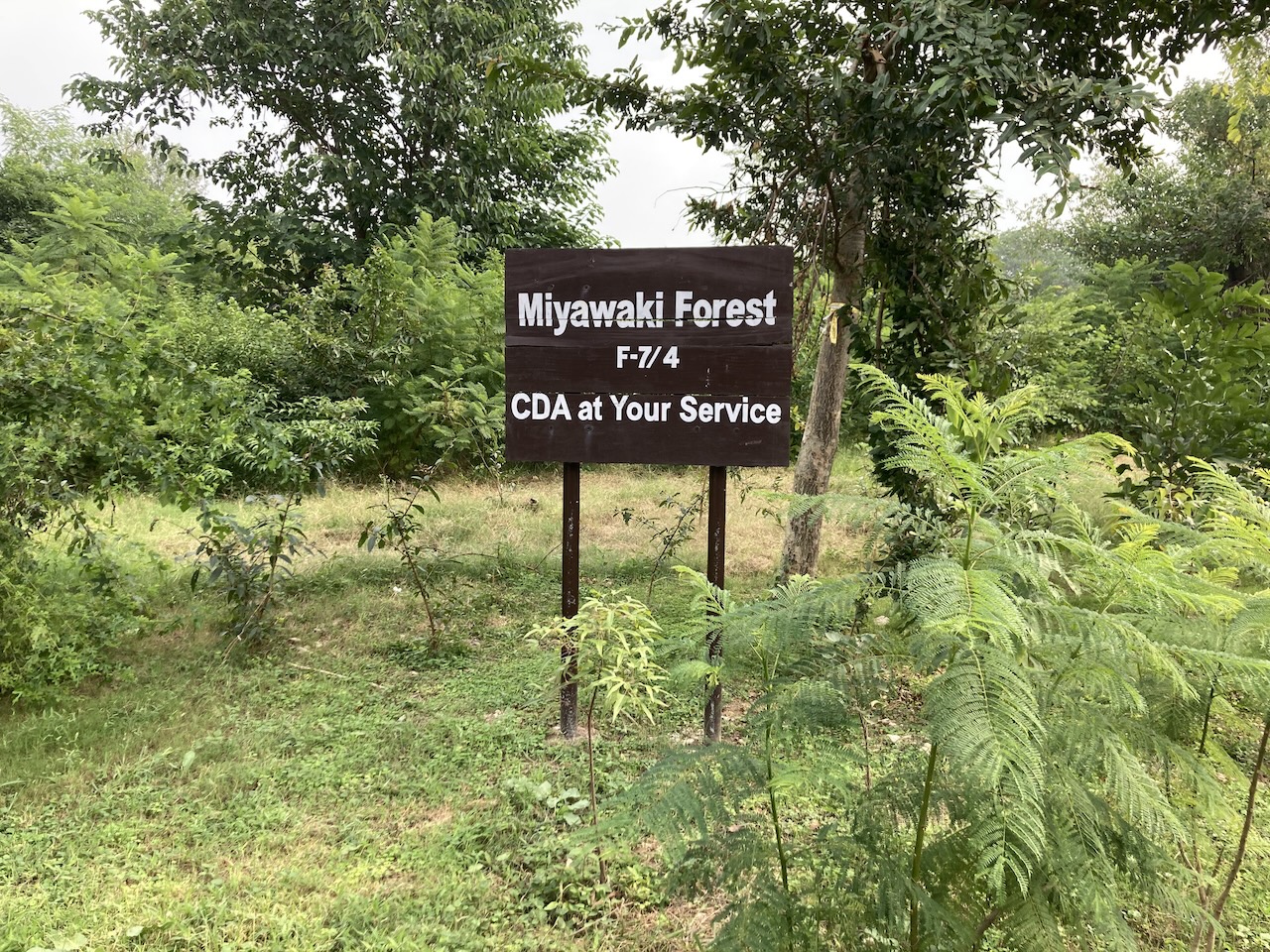
Across urban South Asia, maalis or garden-workers are indispensable to the maintenance and development of green spaces.1 From cultivating gardens and residential parks to green belts and presidential estates, their work is critical to the re/production of visual optics and politics of urban environments and planning (Ginn and Mustafa 2021). In Islamabad and Rawalpindi, Pakistan’s twin cities, where I conducted ethnographic fieldwork between 2022 and 2024, intensive urban afforestation campaigns to address environmental pollution and rapid urbanization relied heavily on maalis.2 Their labor extends from the plant nursery, where they grow, propagate, and maintain future repositories of trees, plants, and flowers, to the broader urban landscape. At one of the twin city’s largest plant nurseries, most of the maalis had acquired their knowledge and skills through years of practical, hands-on experience. Others had transferred their expertise from farming and working in the fields to urban horticulture. Alongside desires of job security—employment in the public sector was seen as relatively stable—and a passion for plants interlaced with a sense of religious obligation, one of the maalis also echoed the joy of working outside in the open air (khuli fiza).
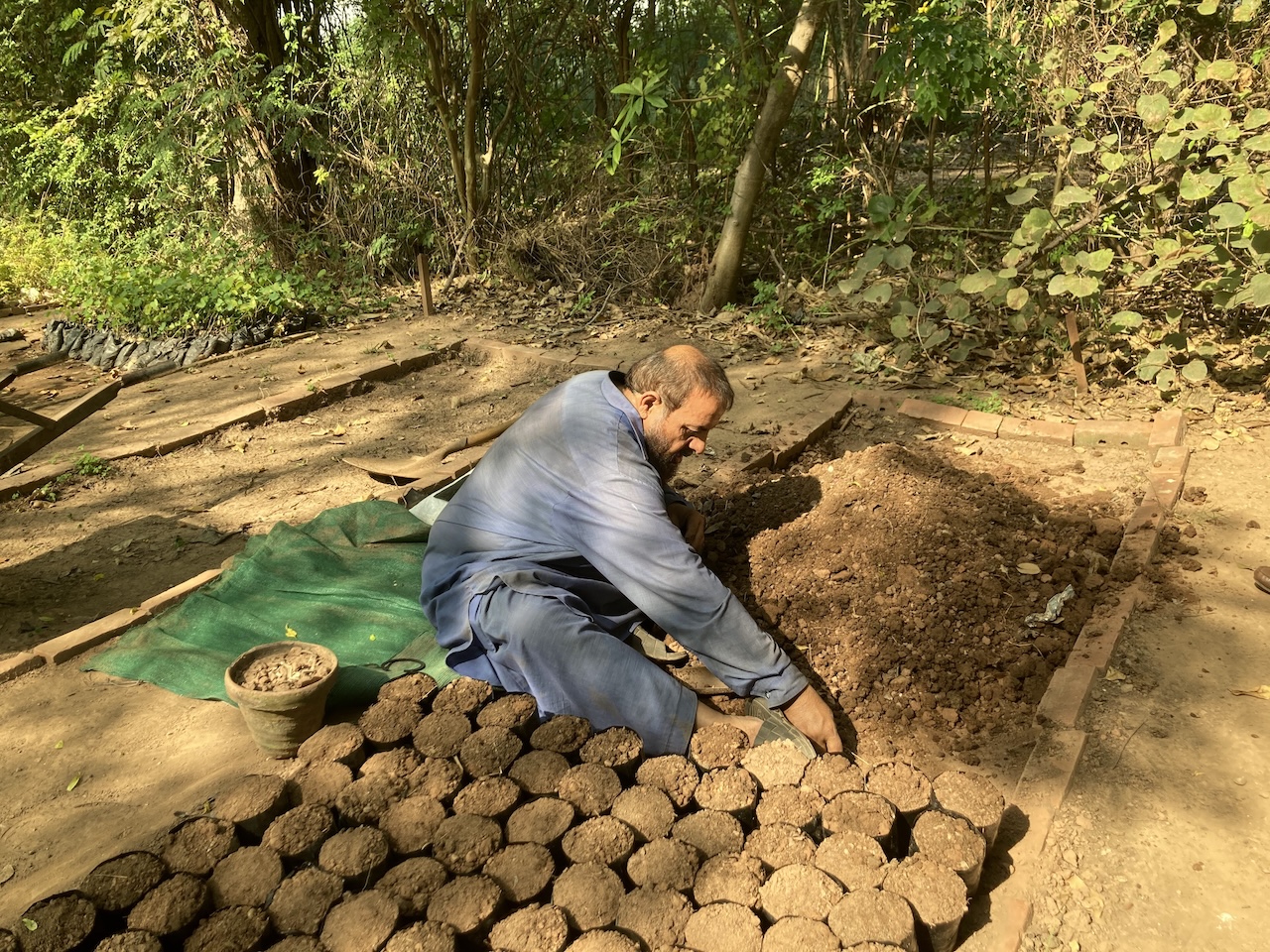

Yet, together with the visible labor of growing, sustaining, and replacing vegetal life, these laborers also endure and live with exposure to extreme weather. Weather creates a “visceral experience” that is not a feeling on the outside but one that permeates and connects human bodies with their surrounding ecologies (Crate 2011). The physical and outdoor nature of their work means that they are constantly and continuously encountering various intensities of the weather. For instance, during a blistering heat wave in 2023 as I traveled across the major highway connecting Islamabad and Rawalpindi, maalis were directed to beautify the spaces around a newly revamped highway. Water tankers lined up next to the traffic median regularly to quench thirsty plants in the throes of the beautification process. Although occasionally relieved by the cover of a scarf, cap, or the partial cover of a tree, their routine tasks placed them under direct exposure to the sun. Their bodies toiled around the clock, upon and along the massive concrete and asphalt structures, to prepare the landscape for official inauguration.
Conditions of extreme heat have significant physiological impact, ranging from mild dehydration to heat stroke, kidney failure, and even death. Maalis provide care work for plants and city beautification while encountering uncaring systems. Other than maalis who became private nursery owners or are able to acquire additional certifications, the ‘ordinary’ maali is often considered dispensable. Within the institutional hierarchy of the city’s official wing dedicated to the environment, horticultural officers rely on maali’s skills and physical labor but rarely include them within the planning stages or attend to the atmospheric and climatic risks encounter.
In an era of planetary global warming and higher than average local temperatures, the climate crisis is marked by not only by extreme events such as urban flash floods or heat waves. The crisis is also present when projects seen as solutions lead to the gradual and slow withering of bodies that are held responsible for bringing these solutions to life. What this tells us is that the city is envisioned and planned to be sustainable for the elite and certain types of work at the cost of making the working class, those who produce and maintain the urban landscape, further vulnerable.3 This state of “embodied precarity” (Doshi 2017) draws out the politics of climate solutions that reinforce racializing notions of who is made to endure extreme conditions and who is the city made livable for.4
For instance, Yusuf, a maali in his fifties, had worked at a large public nursery in Islamabad and was diagnosed with late-stage kidney failure. Despite experiencing persistent pain and discomfort, he worked even when the mercury exceeded forty Celsius (around a hundred degrees Fahrenheit), sweating, and bearing with (bardasht) dehydration symptoms. When I met Yusuf, he was asking the security guard to write him a letter requesting partial leave for the day for a doctor’s appointment. The doctors had recommended a kidney transplant since both his kidneys were failing.
An hour earlier, Yusuf had been sitting on an inverted pot in the porch, gently extracting the seeds for sukh chayn (Indian beech tree, the name symbolizing peace and tranquility). Because he had kidney disease, Yusuf qualified for ‘disability duties’ that relieved him from more intense labor. Sitting in the veranda without a fan was not exactly a source of relief from the summer heat. Yet, as most maalis shared, they would still opt for this (public sector) employment because it guaranteed health insurance and access to medical services in a city with limited healthcare options for poor people. In the absence of institutionalized or social recognition of extreme weather as a potential occupational risk by the labor union or higher authorities, Yusuf’s current state of health was seen as removed from the conditions under which he had labored. Recommended precautions against high temperatures and heat stress include hydration and rest. Even though there was plenty of shade and the temperature inside the nursery was a little cooler than the outside, maalis were actively moving around. The only source of hydration for each sub-area was a single cooler filled with water from the tubewell or the sole filter water machine inside the office building, with unknown maintenance. Occasionally, someone brought a huge chunk of ice in a plastic bag from the market down the street. As I stood talking to Yusuf, a security guard chimed in, “He doesn’t take precaution,” while another maali laughed that Yusuf eats too much meat.
Yusuf was solemn and shared that he was hesitant about the kidney transplant, especially its after-effects. “Whoever had the transplant, their face is now all black),” he said.5 His concern around discoloration was not about aesthetics but rather the appearance of skin that has been burnt. Yusuf’s refusal echoes Corwan and Gidwani’s (2021, 1692) claim that the “the maintenance and repair of an urban regime of accumulation are accomplished to the detriment of self and social reproduction.” When socio-economic structures normalize expectations of endurance (bardasht), the effects of weather extremities become an unrecognized condition of what it takes to be a maali. As such, it puts uncompensated demands upon their bodies to perform not only the skilled work but also the work of becoming habituated (aadat) to altered climates. Yusuf’s choice to delay or deny treatment also tells us that attempts at self-preservation are both social and temporal. The withering body encounters weather not as a given set of ecological perimeters but as part of a social and political regime as well.6 Thus, even as afforestation projects appear as solutions for a more livable future in climatically altered cities, the lack of attention to the workers involved in the care and maintenance of the trees has already reinforced the unjust burden of capitalist relations.
References
Baviskar, Amita, ed. First Garden of the Republic: Nature in the President's Estate. Publications Division, Government of India, 2016.
Crate, Susan A. 2011. “Climate and Culture: Anthropology in the Era of Contemporary Climate Change.” Annual Review of Anthropology 40 (1): 175–94.
Doshi, Sapana. "Embodied urban political ecology: Five propositions." Area 49, no. 1 (2017): 125-128.
Ginn, Franklin, and Daanish Mustafa. "Planting soft Pakistan." The work that plants do: Life, labour and the future of vegetal economies (2021): 71-83.
Government of Pakistan, Ministry of Climate Change. “National Climate Change Policy.” October 2021.
Macktoom, S., Anwar, N. H., & Cross, J. (2023). Hot climates in urban South Asia: Negotiating the right to and the politics of shade at the everyday scale in Karachi. Urban Studies, 61(15), 2945-2962. (Original work published 2024).
Nading, Alex M. "Living in a toxic world." Annual Review of Anthropology 49, no. 1 (2020): 209-224.
Ranganathan, Malini. "Caste, racialization, and the making of environmental unfreedoms in urban India." In Rethinking Difference in India Through Racialization, pp. 43-63. Routledge, 2022.
Rehman, Nida. "Description, display and distribution: cultivating a garden identity in late nineteenth-century Lahore." Studies in the History of Gardens & Designed Landscapes 34, no. 2 (2014): 176-186.
Venkat, Bharat. “Toward an anthropology of heat.” Anthropology News 12 (2020)
1 For example, see Baviskar (2016) and Rehman (2014) on the role of gardeners in transforming and cultivating urban space.
2 Urban afforestation modeled after the Japanese technique of Miyawaki urban forests was a major policy goal outlined in the Government of Pakistan’s National Climate Policy, 2021, and heavily promoted by the Prime Minister and other officials as a way to combat Pakistan’s increasing vulnerability to climate change.
3 Here, it is not only gardeners but also other forms of work, such as sanitations and cleaning, urban agriculture, and waste management, that work with and alongside heat as an everyday reality.
4 Several scholars have offered critical and thoughtful expositions of the ways that colonial and capitalist practices racialize bodies and place marginalized communities in line of environmental harm (Venkat 2020; Ranganathan 2022).
5 In Urdu, Jis ka bhi transplant hua hai, unka chehra poora kaala ho jata hai
6 This joins Neimanis and Hamilton’s (2018, 82) reading of Christina Sharpe’s discussion on weather in a climate that is always anti-Black, when they write, “In the face of the greatest climatic transformation that human bodies have ever known, weathering means learning to live with the changing conditions of rainfall, drought, heat, thunderstorm as never separable from the ‘total climate’ of social, political, and cultural existence of bodies...Weather is not ahistorical, but nor is it facilely ‘made’; it is rather wrought from a specific set of conditions.”